Unmasking Harvey Dent: A New Dawn for Joker Two Face
Todd Phillips' Joker cinematic universe has consistently pushed the boundaries of comic book adaptations, prioritizing gritty character studies over direct adherence to established lore. Following the immense success of 2019's Joker, which explored the tragic descent of Arthur Fleck into the Clown Prince of Crime, the highly anticipated sequel, Joker: Folie à Deux, promises to delve even deeper into the chaotic heart of Gotham. While Joaquin Phoenix returns as the titular character, and Lady Gaga joins as a captivating Harley Quinn, one of the most intriguing developments is the introduction of Harvey Dent, played by Harry Lawtey, and the film's audacious reimagining of the iconic villain, Joker Two Face.
For decades, Harvey Dent's transformation into Two-Face has been a cornerstone of Batman's rogues' gallery, a tragic tale of justice corrupted by a devastating chemical attack or accident. However, Folie à Deux appears poised to redefine this origin entirely, weaving Dent's descent into villainy directly into the fabric of Arthur Fleck's anarchic influence. This isn't just an Easter egg; it's a pivotal narrative choice that underscores the pervasive impact of the Joker's philosophy on Gotham City and its inhabitants, potentially offering a profound new perspective on the genesis of Joker Two Face.
Todd Phillips' Vision: Crafting Character, Not Canon
One of the defining characteristics of Phillips' *Joker* films is their steadfast refusal to be constrained by traditional comic book canon or to set up a sprawling interconnected universe. Unlike many contemporary superhero blockbusters, these movies are self-contained, character-driven narratives that use the familiar iconography of Batman's world to explore darker, more realistic themes of mental health, societal neglect, and the birth of chaos. The first film famously reinterpreted characters like Thomas Wayne and even offered a glimpse of a young Bruce Wayne, not as a precursor to a future hero, but as elements within Arthur Fleck's distorted reality.
This approach extends to Folie à Deux. The film’s primary focus remains on Arthur and his complex relationship with Harley Quinn, yet Phillips and his collaborators are adept at integrating other well-known figures in ways that serve their unique storytelling vision. Harvey Dent's inclusion is a prime example. Rather than merely being a nod to fans, his presence is integral to the plot surrounding Arthur's trial and, more significantly, provides a fresh, organic context for his eventual disfigurement and psychological break. It highlights Phillips' mastery in crafting a narrative where the echoes of comic book lore resonate deeply, even as their origins are drastically recontextualized. This deliberate choice allows for a more focused, impactful character study, free from the obligations of setting up future spin-offs or ensuring strict continuity with other DC properties.
The Trial of Arthur Fleck: Harvey Dent's Pivotal Role
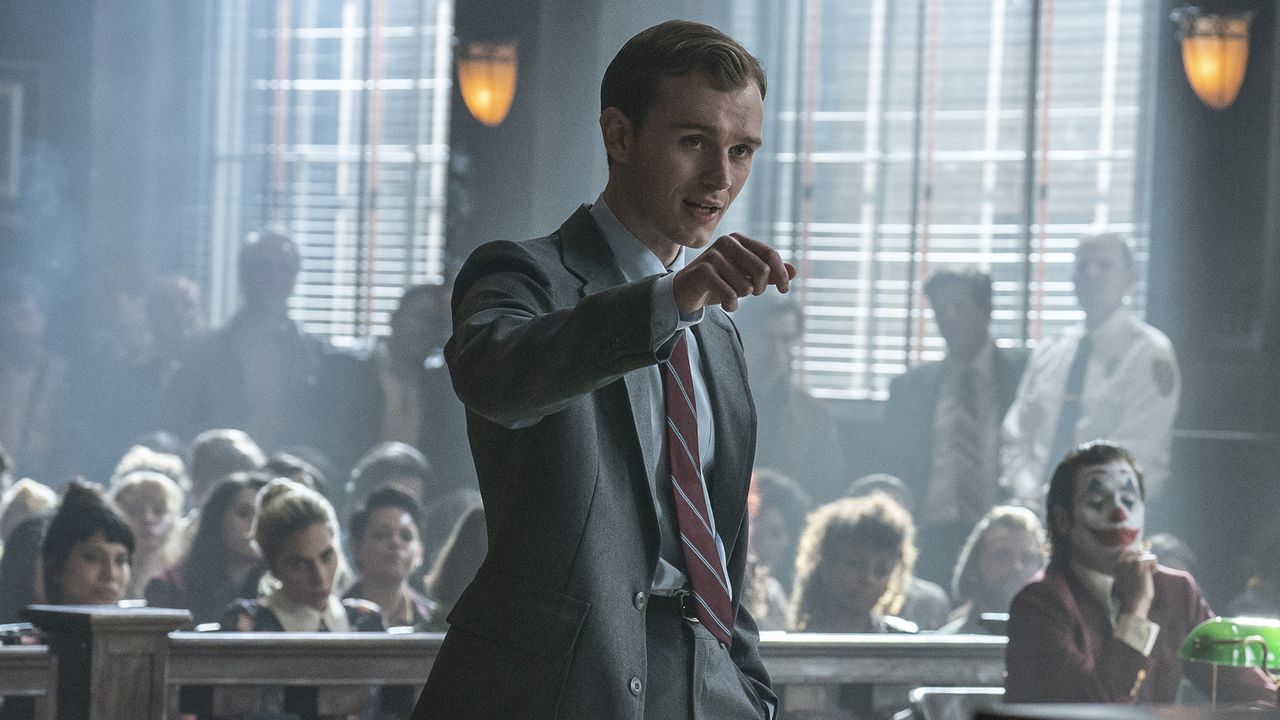
In Joker: Folie à Deux, the narrative picks up with Arthur Fleck facing the consequences of his actions from the first film, undergoing a high-stakes trial for the murders he committed. Enter Harvey Dent, portrayed by Harry Lawtey, who takes on the crucial role of the prosecuting attorney. Dent's presence is not merely decorative; he is a formidable legal adversary tasked with proving that Arthur Fleck and the destructive persona of the Joker are one and the same, despite the defense's attempts to separate the man from the myth.
This legal battle forms a significant backdrop to the unfolding drama, placing Dent directly in opposition to the very source of Gotham's burgeoning chaos. His fervent pursuit of justice against Arthur aligns perfectly with the established character of Harvey Dent as a champion of law and order, a figure dedicated to cleaning up the corruption plaguing Gotham. However, his proximity to Arthur and the fervent cult of personality surrounding the Joker proves to be his undoing. The courtroom scenes are not just about Arthur's fate; they are a crucible for Dent, exposing him to the raw, unbridled anarchy that the Joker has unleashed upon the city. It’s here, amidst the legal crossfire and the escalating tension, that we witness the first crucial steps in Dent's tragic path towards becoming Joker Two Face, as he directly confronts the chaos that will inevitably consume him.
For more insights into how Dent's fate is woven into the narrative, you might find this article illuminating: Joker: Folie à Deux Unveils Harvey Dent's Dark Destiny.
From Prosecutor to Punisher: The Inciting Incident of Two-Face
The turning point for Harvey Dent in Folie à Deux is shockingly visceral and deeply symbolic. During the reading of Arthur Fleck's guilty verdict, a momentous event occurs that irrevocably alters Dent's life and sets him on a path to villainy. As Arthur grapples with the realization that the Joker persona has taken on a life of its own, far beyond his control, an explosion rocks the Gotham courthouse. This act of violence is clearly perpetrated by individuals inspired by the Joker's ethos of chaos and destruction, a direct consequence of the anarchic movement Arthur inadvertently sparked.
In the aftermath of the blast, with the courtroom plunged into disarray, Arthur seizes the opportunity to escape. Crucially, among the many injured in the devastating explosion is Harvey Dent, whose face is visibly scorched and disfigured. This moment is not merely a graphic depiction of injury; it is the genesis of Two-Face, explicitly linking his iconic scarring to the direct actions of Joker-inspired followers. Unlike traditional comic book origins where Two-Face's scarring often comes from acid attacks by mobsters or specific villains, Phillips' rendition makes the Joker's pervasive influence the direct catalyst. This re-contextualization means that Dent doesn't just become a foe of Batman; he becomes, in a twisted sense, a product of the Joker's world, a dark mirror reflecting the chaos that Joker propagates.
This redefinition transforms Two-Face from a standalone tragic figure into a direct consequence of Arthur Fleck's reign of terror, solidifying the idea that Joker's impact extends far beyond his immediate actions. It begs the question: Did Joker's Chaos Create Two-Face in Folie à Deux? The evidence strongly suggests a resounding yes, forging an undeniable link between the two iconic characters.
Rewriting Destiny: How Joker Two Face Emerges Anew
The implications of Joker: Folie à Deux redefining Two-Face's origin are far-reaching and deeply resonant within Phillips' gritty universe. By having the Joker's influence directly lead to Harvey Dent's disfigurement, the film creates a profound symbiotic relationship between the two characters, one rooted in a shared origin of chaos. Traditionally, Two-Face is a tragic figure, a noble prosecutor whose idealism is shattered by an act of violence, often perpetrated by figures like Sal Maroni. His psychological break is a struggle between his former identity and his new, fractured persona, driven by an obsession with duality and chance.
In Folie à Deux, the narrative shifts. Dent's transformation isn't an isolated tragedy; it's a direct consequence of the Joker's destructive legacy. This makes the eventual emergence of Joker Two Face a more personal and potent commentary on how an individual's madness can ripple through society, corrupting even those dedicated to upholding justice. It adds a layer of tragic irony: the man trying to prosecute the Joker inadvertently becomes another of his victims, not by direct attack, but by the overwhelming, societal contagion of his ideology. This perspective grounds Two-Face's iconic coin flip in a new context, perhaps a desperate attempt to find order or meaning in a world violently disrupted by an agent of pure disorder.
This unique origin story aligns perfectly with the overarching theme of the Joker films: exploring the human cost of a collapsing society and the birth of super-villainy not from fantastical accidents, but from societal pressures, mental health crises, and the infectious nature of rebellion. It offers a fresh, more grounded interpretation of an enduring villain, making him not just a foil for Batman, but a direct, heartbreaking byproduct of the very chaos Arthur Fleck unleashed.
Conclusion
Joker: Folie à Deux is not merely a sequel; it's a bold continuation of Todd Phillips' deconstruction of the superhero genre, especially evident in its handling of Harvey Dent. By reimagining Two-Face's origin as a direct consequence of the Joker's anarchic influence, the film offers a powerful and deeply personal narrative for one of Batman's most complex villains. This creative liberty not only grounds Dent's transformation in the grim reality of Phillips' Gotham but also profoundly links the birth of Joker Two Face to the very chaos Arthur Fleck represents. It's a testament to the film's commitment to character-driven storytelling, promising a powerful and potentially heart-wrenching new chapter in the saga of Gotham's most infamous figures.