Did Joker's Chaos Create Two-Face in Folie à Deux?
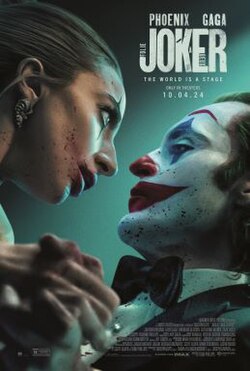
Todd Phillips' Joker films have carved a unique niche within the superhero genre, eschewing traditional comic book narratives for gritty, character-driven psychological studies. While the first film centered entirely on Arthur Fleck's descent into madness, its highly anticipated sequel, Joker: Folie à Deux, promises to expand this chaotic world, notably introducing Lady Gaga as Harley Quinn. However, the film also subtly yet significantly features another iconic Batman villain: Harvey Dent, the man destined to become Two-Face. The burning question on every fan's mind is whether the Joker's reign of anarchy directly precipitates Dent's tragic transformation. Early insights and teasers from Folie à Deux strongly suggest a chilling answer, hinting that the very chaos unleashed by the Joker may indeed forge Gotham's bifurcated champion of justice and vengeance, creating a profound Joker Two Face connection.
Harvey Dent's Pivotal Role in the Joker's Trial
In Joker: Folie à Deux, the acclaimed actor Harry Lawtey steps into the shoes of Harvey Dent, not yet the scarred villain but a sharp, ambitious prosecuting attorney. His initial appearance, glimpsed in a teaser watching Arthur Fleck on a television screen, immediately signals his importance. Dent is featured prominently as the legal adversary attempting to hold Arthur Fleck accountable for the murders committed during the events of the first Joker film. For long-time fans of DC lore, the name Harvey Dent is synonymous with Gotham's District Attorney, a crusader for justice who, through a tragic accident, succumbs to villainy as Two-Face, becoming an indelible part of Batman's rogues' gallery. While Folie à Deux is far from a direct origin story for this character, Phillips and his collaborators are adept at weaving in rich allusions and potential alternative explanations for established narratives, much as they did for Bruce Wayne's early life in the first film. Dent's presence in Arthur Fleck's trial isn't just an Easter egg; it's a foundational plot point that positions him directly in the path of the Joker's destructive legacy.
The Trial: A Clash of Personalities and Ideologies
The courtroom scenes in Folie à Deux are poised to be a dramatic battle of wills and interpretations. Arthur Fleck, now widely known as the instigator of a city-wide movement, faces judgment for his heinous acts. His defense attorney, Maryanne Stewart, attempts to argue that Arthur Fleck and the destructive persona of the Joker are two distinct entities, suggesting a dissociative state where "Joker" is the criminal, not Arthur. Conversely, Harvey Dent, as the prosecuting attorney, tirelessly works to prove that Arthur and Joker are one and the same, making Arthur solely responsible for his actions and the ensuing chaos. This legal confrontation is more than just a trial; it's a philosophical debate on identity, culpability, and the very nature of madness.
Intriguingly, the film posits that both lawyers, in a sense, turn out to be right. Arthur Fleck eventually takes ownership of his actions, representing himself and accepting full responsibility. Yet, this acceptance is intertwined with a stark realization: the persona of the Joker has grown far beyond him, becoming a symbol and an ideology that has ruined his life and taken on a life of its own. This realization underscores the dangerous power of a movement fueled by chaos, a movement that the Joker may have started but can no longer control. The tension culminates in a shocking development that directly impacts Dent, revealing the profound and destructive reach of the Joker's influence. For a deeper dive into this reimagined origin, you might be interested in How Joker 2 Redefines Two-Face's Origin Story.
The Catalyst: An Explosive Origin for Two-Face?
The turning point for Harvey Dent, and potentially his transformation into Two-Face, appears to be ignited by the very anarchy Arthur Fleck inspired. Following the reading of Arthur's guilty verdict, a bomb is detonated outside the Gotham courthouse. This act of violence is clearly inferred to be the work of individuals (or a person) who have embraced the "Joker ethos" – the philosophy of chaos above all else that Arthur's actions propagated. The resulting explosion creates mass pandemonium, killing or injuring nearly everyone in the courtroom, and allowing Arthur a brief window to escape confinement. Amidst this carnage, one figure stands out, forever changed: Harvey Dent.
Reports from the film indicate that Dent sustains severe injuries in the blast, specifically describing half of his face as being horrifically scorched. This visually striking moment is not just a nod to his comic book destiny but serves as a clever, grounded, and terrifyingly direct alternative origin for the iconic villain. Instead of the traditional acid attack, Joker: Folie à Deux presents an origin rooted in the direct consequences of the Joker's movement. It's a powerful thematic statement: the very forces of chaos and lawlessness that Joker champions physically scar the embodiment of Gotham's justice system. This radical reinterpretation of the Joker Two Face dynamic adds a visceral layer of consequence to Arthur Fleck's actions, demonstrating how his influence irrevocably twists the fate of those around him. Explore more about Dent's dark path in Joker: Folie à Deux Unveils Harvey Dent's Dark Destiny.
Phillips' Approach: Easter Eggs vs. Cinematic Universe Building
Todd Phillips has consistently emphasized that his Joker films are character studies, designed to delve deep into the psyches of their protagonists rather than setting up an expansive cinematic universe in the vein of other comic book adaptations. This artistic choice allows for significant creative freedom, enabling Phillips and his team to "take big swings" with established DC lore. The inclusion of characters like Thomas Wayne, a young Bruce Wayne, and now Harvey Dent, serves primarily as thematic reinforcement and intriguing Easter eggs rather than explicit setup for future storylines or spin-offs.
This approach allows Phillips to recontextualize familiar figures within the grim, hyper-realistic lens of his Gotham. Instead of rigidly adhering to canonical origin stories, he offers plausible, often more brutal, alternative explanations that align with the grounded tone of his films. The depiction of Dent's scarring as a direct result of Joker-inspired anarchy isn't an attempt to launch a standalone Two-Face movie; it's a powerful narrative device to illustrate the far-reaching and devastating impact of the Joker's actions on the fabric of Gotham society and its protectors. This commitment to standalone, character-driven narratives is what gives the Joker films their unique edge and critical acclaim, allowing them to explore darker themes and psychological depths often untouched by more traditional superhero fare.
Conclusion
Joker: Folie à Deux appears poised to deliver a compelling and tragic origin for one of Batman's most complex villains, directly linking his creation to the pervasive chaos instigated by the Joker. By having Harvey Dent's transformation into Two-Face be a direct consequence of an explosion set by Joker's followers, the film crafts a powerful narrative about how anarchy can corrupt and disfigure even the most upright symbols of justice. This profound connection between Joker Two Face in Phillips' universe isn't just an exciting new interpretation; it's a chilling commentary on the ripple effects of madness and the enduring legacy of a villain who, whether he intends to or not, shapes the destiny of Gotham's iconic figures. As the film unfolds, audiences will witness firsthand how the Joker's destructive path leaves an indelible, scarred mark on the very soul of the city.