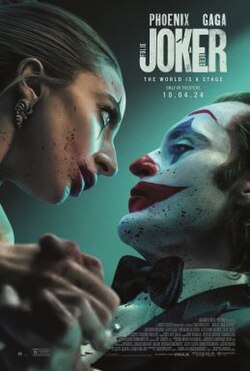
Joker: Folie à Deux Unveils Harvey Dent's Dark Destiny
The highly anticipated sequel, *Joker: Folie à Deux*, is set to delve deeper into the chaotic world established by Todd Phillips' original *Joker* film. While Joaquin Phoenix's Arthur Fleck (the Joker) and Lady Gaga's Harley Quinn are undeniably at the heart of this "musical" thriller, the film subtly introduces another iconic character from Batman's rogues gallery whose dark destiny appears intrinsically linked to the Clown Prince of Crime: Harvey Dent. Far from a mere Easter egg, Dent's appearance and the circumstances surrounding it hint at a profoundly reimagined origin for the infamous villain, Two-Face, directly fueled by the anarchy Joker inspires.
The Shadow of Gotham: Harvey Dent's Unveiling in Folie à Deux
In the gritty, unhinged Gotham presented by Todd Phillips, where societal decay and individual madness intertwine, *Joker: Folie à Deux* continues its character study approach. The first film explored the tragic descent of Arthur Fleck into the Joker, and the sequel promises to expand on this with the introduction of Dr. Harleen Quinzel. However, quietly woven into the narrative is the figure of Harvey Dent, portrayed by Harry Lawtey, who takes on the pivotal role of prosecuting attorney in Arthur Fleck’s trial. For any fan of DC lore, the name Harvey Dent instantly conjures images of Gotham's White Knight, a dedicated district attorney whose idealism eventually shatters, leaving behind the scarred, duality-obsessed criminal known as Two-Face. While *Folie à Deux* is not about setting up an expansive DC universe, its inclusion of Dent is a powerful nod to his ultimate fate, suggesting a new, grittier origin for this iconic villain.
A Prosecutor's Fateful Challenge
The core of Arthur Fleck's legal battle in *Folie à Deux* centers on a profound psychological dilemma. His defense attorney, Maryanne Stewart, argues that "Arthur" and "Joker" are separate personalities, attempting to absolve Arthur of responsibility by attributing the heinous crimes of the first film to the burgeoning Joker persona. Harvey Dent, conversely, strives to prove that Arthur Fleck and the Joker are one and the same, unequivocally holding Arthur accountable for his actions. This legal struggle highlights the film's thematic exploration of identity and madness. As the trial progresses, Arthur himself ultimately accepts responsibility, yet he also acknowledges that the "Joker" persona has grown beyond his control, becoming a symbol and force far greater than himself. This internal conflict, the battle between man and monster, sets the stage for Dent's own tragic mirroring of this duality.
From Justice to Jaded: A New Origin for Two-Face
The critical moment that appears to solidify Dent's tragic path to becoming the **Joker Two Face** connection emerges dramatically during Arthur Fleck's trial. Following the reading of a guilty verdict, a bomb detonates outside the Gotham courthouse. This explosive act, widely inferred to be a manifestation of the chaotic "Joker" ethos that now permeates Gotham, creates a scene of widespread destruction and injury. Among the casualties is Harvey Dent himself, whose face is visibly scorched and disfigured by the blast. This visual representation serves as a powerful, albeit subtle, indication of his transformation into Two-Face.
This incident offers a unique and decidedly dark alternative to the character's traditional comic book origin stories. In many iterations, including some of the most famous, Harvey Dent’s scarring is the result of an acid attack by crime boss Sal Maroni. Christopher Nolan's *The Dark Knight* presented a fiery explosion caused by the Joker as the catalyst for Dent's disfigurement. *Joker: Folie à Deux* keeps the Joker's indirect involvement but grounds it even further in the film's established reality: the chaos Joker has unleashed upon Gotham is directly responsible for creating his next nemesis. This interpretation reinforces the notion that Joker doesn't just commit crimes; he contaminates the very fabric of society, breeding new forms of madness and villainy in his wake. To explore this fascinating reinterpretation further, read about
How Joker 2 Redefines Two-Face's Origin Story.
The Catalyst of Chaos: Joker's Unwitting Influence
The courthouse bombing is more than just a plot device; it's a thematic declaration. It symbolizes how the Joker's ideology of anarchy and rejection of societal norms has metastasized throughout Gotham. The explosion, carried out by individuals who embody the Joker's ethos, transforms a crusader for justice into a victim, and seemingly, a new villain. This isn't Joker meticulously planning Dent's downfall; it's the natural, terrifying consequence of the pandemonium he initiated. Dent's disfigurement at the hands of those inspired by the Joker creates a direct, visceral link between the two characters, setting up a deeply personal vendetta rooted in the very chaos Joker champions. This unique narrative choice establishes the **Joker Two Face** dynamic in a fresh and compelling way, highlighting the Joker's far-reaching and destructive impact on Gotham's most upright citizens.
Understanding the Psychological Impact: Beyond the Scars
While the physical scarring of Harvey Dent is a stark visual cue, *Joker: Folie à Deux*'s strength lies in its character-driven narrative, suggesting a profound psychological transformation parallel to his physical wounds. Dent's role as a prosecuting attorney positions him as a staunch believer in law, order, and justice. To have his world literally explode, with half his face scorched by an act of indiscriminate chaos – an act inspired by the very man he sought to condemn – is a shattering experience. This trauma is likely to erode his idealism, replacing it with cynicism, resentment, and a deep-seated sense of injustice. The dual nature of his injury, the clean half versus the scarred half, perfectly mirrors the psychological schism he is likely to endure.
The film's title, *Folie à Deux*, or "madness for two," further enriches this interpretation. While primarily referring to the relationship between Joker and Harley Quinn, it also speaks to the broader societal impact of madness. Dent’s transformation could be seen as another example of how the Joker's brand of chaos infects others, creating a shared delusion or a breakdown of rational thought. Dent, a man who once believed in clear-cut good and evil, is forced to confront a world where those lines are violently blurred, leading him down a path of internal and external duality. For more insights into this dynamic, explore
Did Joker's Chaos Create Two-Face in Folie à Deux?
Todd Phillips' Vision: Subverting Expectations in Gotham
Todd Phillips, as a director and writer, has consistently demonstrated a willingness to take "big swings" with established DC lore, as evidenced by his radical reinterpretation of the Joker in the first film. His approach prioritizes character study and gritty realism over adherence to strict comic book canon or setting up a shared cinematic universe. This is precisely what makes *Joker: Folie à Deux*'s handling of Harvey Dent so compelling. The film isn't trying to establish a future Batman movie; instead, it uses Dent's story to deepen the thematic resonance of Joker's world.
By tying Dent's transformation directly to the fallout of Arthur Fleck's actions and the broader societal chaos he incites, Phillips creates a grounded, visceral origin for Two-Face. It’s an origin that feels organic to the bleak, grounded reality of this Gotham, where iconic villains aren't born of freak accidents alone, but are forged in the fires of social injustice and psychological torment. This interpretation offers a fresh, mature perspective on Batman’s rogues gallery, proving that compelling character narratives can exist and thrive even without the explicit presence of the Caped Crusader. It provides a lens through which to understand how Gotham's descent into madness can corrupt even its most promising figures, pushing them towards a destiny as dark and fragmented as the city itself.
The introduction of Harvey Dent, and the dramatic events that lead to his disfigurement in *Joker: Folie à Deux*, mark a pivotal moment for the film's narrative and its place within the broader DC lexicon. By crafting an origin for Two-Face that is intimately intertwined with the Joker's reign of chaos, the film not only pays tribute to an iconic character but also enriches the bleak, character-driven world Todd Phillips has meticulously built. This reimagined genesis provides a compelling explanation for the birth of a two-faced villain, one whose duality is not merely physical but deeply psychological, born from the very madness he tried to prosecute. As the film unfolds, audiences will witness how the ripple effect of Joker's anarchy can transform even the most ardent champion of justice into one of Gotham's most tragic figures, solidifying the profound and lasting impact of the **Joker Two Face** connection.